



How much do we know about music competitions?
A very special article.
When the organizer of a new international piano competition for children and young people offers a newsletter on its website, that newsletter typically focuses on the content and unique features of the competition itself. After all, promoting the event and highlighting its artistic and organizational challenges is what interests readers—or at least what the editors hope will interest them.
I’m not making an exception, even though it might seem that way at first glance. The idea for the content of this newsletter came to me on December 9, 2022, when I read in the arts section of the FAZ—the Frankfurter Allgemeine Zeitung—about a new dissertation by Nora Kienast on the topic “Music Competitions Under Pressure to Justify Themselves.” The title, “Cartels, Deals, and Rule-Breaking” and the subheading “Two studies openly discuss mafia-like structures in competitions for classical musicians” piqued my interest. Here is an excerpt from the dissertation:
“These statements do not cast music competitions in a favorable light. Jurors report on cliques and group dynamics within the juries, where certain members emerge as spokespeople while others more or less go along with a decision without forming their own opinions; they report having witnessed so-called ‘deals’—such as one juror awarding a particularly high score to another juror’s student. This is how the universally accepted rule against voting for one’s own student is circumvented. Accounts describe how jury rules were broken—such as the rule against having any contact with one’s own student during the competition—or how, prior to the performance rounds, participants and jurors alike initiate lessons to establish connections; ultimately, cartel-like structures emerge. A more or less fixed circle of artists or professors secure jury positions for one another, which results in the same faces always appearing at the competition jury tables.”
Nora Kienast
My immediate reaction: Those must be exceptions; it can't really be like that. Far from it!
Nora Kienanst interviewed ten judges and four contestants. All of the judges had previously served on the ARD competition jury, which speaks to the prominence and artistic caliber of the interviewees. After all, the jury for the competition held in Munich is made up of well-known figures.
“Where there are people, there are human interactions,” she is quoted as saying in one of her interviews. But does that explain everything? I don’t think so: It’s up to the organizers!
Major competitions like the ARD Competition are, of course, extremely important for a career. And any potential irregularities damage the reputation of any competition. After all, our competition would like to become a “major” one someday, too.
For that reason alone, it was important to us that no students of the professors and music educators serving on our jury be allowed to participate in our competition—even though we’re “only” dealing with children and teenagers. After all, the disadvantage to any potential “stars of tomorrow” who might be unjustly eliminated would be too great for us—not to mention the moral implications ganz .
Our objective evaluation system also prevents irregularities. The criteria are as follows:
- Artistic Design
- Sound Quality
- Playing Technique
- Stylistics
- Fidelity to the text
- Musical Comprehension
- Stage presence
- Personality
- Originality
- Potential for Growth
- Level of Difficulty and Mastering the Piece
And our jury uses an internationally recognized scoring system:
- Prize: 25/24 points
- Prize: 23/22 points
- Prize: 21/20 points.
If multiple participants tie for the same score, the prizes will simply be awarded multiple times. Quality alone is the deciding factor.
Even participants who do not win a prize receive a certificate based on their score as an incentive:
- Participated with very good results: 17–19 points
- Participated with good results: 14–16 points
- Successfully participated: 11–13 points
- Participated: up to 10 points
All of this ensures "clean" conditions.
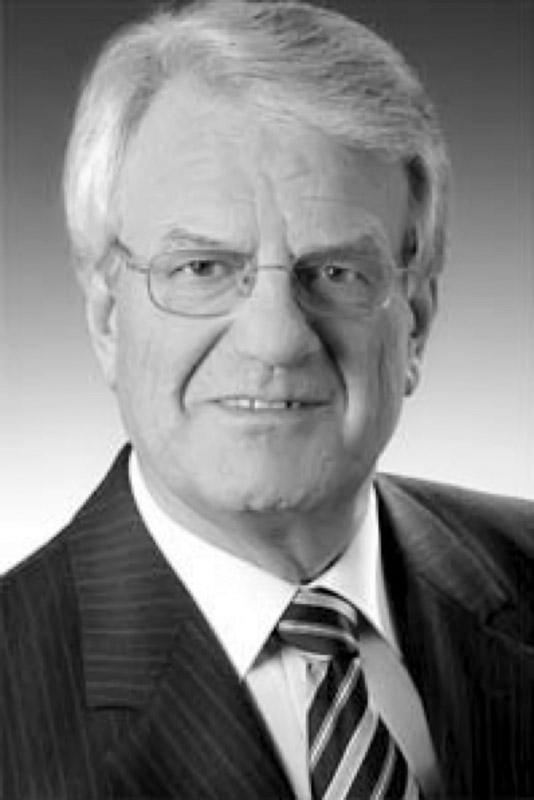
And I guarantee that in our competition.
With that in mind, I extend my warmest greetings to you and look forward to seeing you at our award-winners' concert.
Prof. Dr. Gerhard Hücker
General Director
Kronberg International Piano Competition 2023